Buy educationpoints.eu ?
We are moving the project
educationpoints.eu .
Are you interested in purchasing the domain
educationpoints.eu ?
domain@kv-gmbh.de · 0541-91531010
Buy educationpoints.eu ?
How did timekeeping work in ancient times?
In ancient times, timekeeping was primarily based on the observation of celestial bodies such as the sun, moon, and stars. The movement of these celestial bodies helped people track the passage of time, with the sun's position in the sky indicating the time of day. Water clocks and sundials were also used to measure time more precisely. The concept of dividing the day into hours, minutes, and seconds was developed by the ancient Egyptians and Greeks, laying the foundation for modern timekeeping systems. **
How does timekeeping work in Star Wars?
In the Star Wars universe, timekeeping is based on the Galactic Standard Calendar, which is divided into 12 months with each month consisting of 30 days. The calendar is based on the orbit of the planet Coruscant, the capital of the Galactic Republic. Each day is divided into 24 standard hours, with each hour consisting of 60 minutes and each minute consisting of 60 seconds. Timekeeping in Star Wars is essential for coordinating events across different planets and systems in the galaxy. **
Similar search terms for Timekeeping
Top-Angebote
Products related to Timekeeping:
-
Perfect Picks Market Kids Learning Clock Silent Analog Teaching Wall Clock For Classroom & Bedroom Inch black 8 InchTransform learning into an exciting daily adventure with this Kids learning clock designed to help children master time with confidence. Featuring colorful numbers, clearly marked hands, and an easytoread analog display, it's perfect for young...54,97 $*Shipping: 0,00 $Secure redirect to the provider
-
JoyToys Montessori Wooden Learning Clock Time Teaching Puzzle For Kids Montessori Wooden Learning Clock Time Teaching Puzzle For KidsLearn through play with our wooden learning clock, designed to help children confidently understand time while developing essential early learning skills. This engaging Montessori clock combines handson puzzle play with interactive time practice,...29,97 $*Shipping: 0,00 $Secure redirect to the provider
-
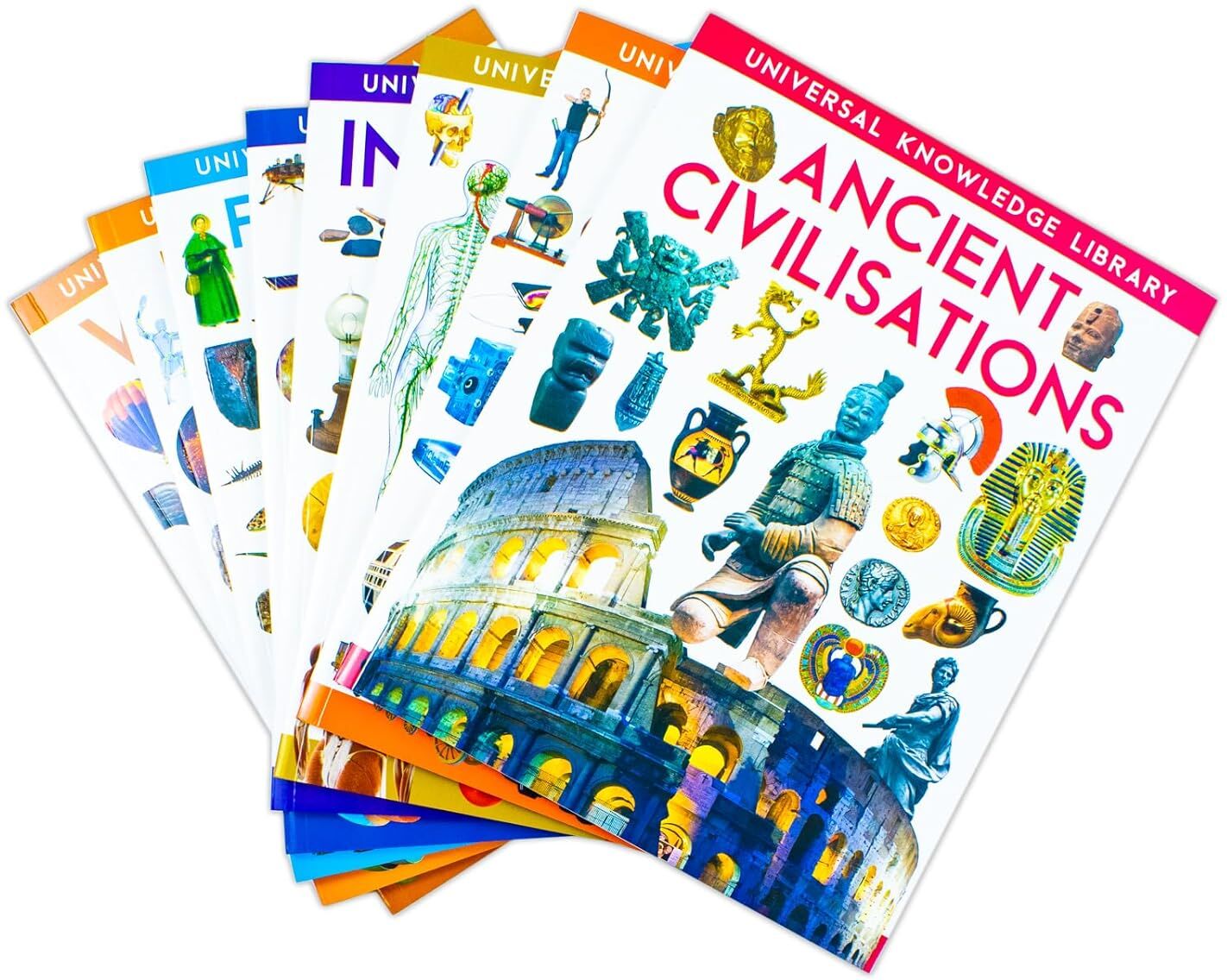
Fox Eye Publishing Universal Knowledge Library Science and History 8 Volume Book Collection Set – Ancient Civilisations, Human Body, Universe & Educational Learning BookUniversal Knowledge Library: Science and History - 8 Volumes Introduction: Welcome to the Universal Knowledge Library, a magical collection that opens the door to the wonders of science and history. These eight beautifully illustrated books will take you on exciting adventures, where you'll explore ancient civilizations, discover amazing inventions, and learn about the mysteries of the universe. Get ready to embark on a journey of discovery and wonder! Ancient Civilisations: Travel back in time to explore the incredible stories of ancient civilizations like Egypt, Greece, and Rome. Learn about their cultures, inventions, and the people who shaped history. Inventions: Uncover the amazing inventions that changed the world, from the wheel and the printing press to modern-day gadgets. Discover how these creations have made our lives easier and more exciting. Prehistoric Life: Step into the world of dinosaurs and other prehistoric creatures. Find out how these incredible animals lived millions of years ago and what scientists have learned from their fossils. Universe: Look up at the night sky and explore the vast universe. Learn about stars, galaxies, black holes, and the fascinating science behind the cosmos. Energy: Dive into the world of energy and discover how it powers everything around us. From the food we eat to the electricity that lights our homes, energy is all around us! Human Body: Take a fantastic journey inside the human body. Learn about how our organs work, how we grow, and the amazing ways our bodies keep us healthy. Planets: Visit the planets in our solar system and beyond. Discover the unique features of each planet and what makes Earth so special. Weather: Understand the science of weather and how it affects our daily lives. Learn about rain, snow, storms, and the fascinating patterns of our planet's climate. With the Universal Knowledge Library, each book is a new adventure waiting to be explored. Open the pages and let your curiosity lead the way!17,99 £*Shipping: 2,99 £Secure redirect to the provider
-
Scholastic Teaching Resources Sight Word Readers Classroom Box SetJumpstart reading success with this irresistible collection of 125 little books that introduce and reinforce the first 50 must-know sight words! Each set includes a sturdy storage box stocked with 5 copies of 25 delightful tales—each presenting two...101,99 $*Shipping: 0,00 $Secure redirect to the provider



-
How can one program timekeeping in C?
To program timekeeping in C, one can use the time.h header file which provides functions to work with date and time. The time() function can be used to get the current time in seconds since the Epoch. This value can be converted to a more readable format using functions like localtime() or gmtime(). Additionally, functions like strftime() can be used to format the time in a specific way. By utilizing these functions, one can effectively program timekeeping in C. **
-
How does the timekeeping work in Star Wars?
In the Star Wars universe, timekeeping is based on the Galactic Standard Calendar, which is divided into 12 months with each month consisting of 30 days. The calendar is based on the Coruscant solar cycle, with each day lasting 24 standard hours. Time is also measured in terms of rotations of the planet Coruscant, with 24 hours in a day and 60 minutes in an hour. The timekeeping system in Star Wars is consistent across the galaxy and is used by various species and cultures. **
-
What were the timekeeping methods in the Middle Ages?
In the Middle Ages, timekeeping methods were primarily based on the position of the sun in the sky. Sundials were commonly used to track time during the day, with the shadow cast by the sun indicating the time. Water clocks, known as clepsydrae, were also used to measure time by the flow of water from one container to another. Candle clocks were another method, where time was measured by the amount of wax that had burned. These methods were imprecise compared to modern timekeeping but were sufficient for daily activities in the Middle Ages. **
-
How does timekeeping work in the Bleach Soul Society?
In the Bleach Soul Society, timekeeping is based on a 24-hour cycle similar to Earth. However, the Soul Society also has its own unique method of timekeeping known as the Gotei 13 Timekeeping. This system divides the day into six "gates," with each gate lasting four hours. The gates are named after the divisions of the Gotei 13, the military force of the Soul Society. This system is used to coordinate the activities of the Gotei 13 and other Soul Society organizations. Overall, timekeeping in the Bleach Soul Society is a combination of traditional Earth timekeeping and its own distinct system. **


How does the timekeeping work in the Bleach Soul Society?
In the Bleach Soul Society, timekeeping is based on a system of day and night cycles similar to Earth. The Soul Society has its own sun and moon that rise and set, marking the passage of time. The Soul Reapers use these celestial bodies to keep track of time and schedule their duties and activities. Additionally, the Seireitei, the central city of the Soul Society, has a large clock tower that helps in timekeeping for the residents. Overall, timekeeping in the Bleach Soul Society is a combination of natural celestial cues and man-made structures to maintain order and organization. **
What is the difference between timekeeping and different month lengths?
Timekeeping refers to the measurement and recording of time, typically using units such as seconds, minutes, and hours. Different month lengths, on the other hand, refer to the varying number of days in each month of the year. While timekeeping is a universal system used to track the passage of time, different month lengths are a result of the Earth's orbit around the sun and the lunar cycle. This leads to months ranging from 28 to 31 days, with February being the shortest month and varying lengths of 30 or 31 days for the other months. **
Top-Angebote
Products related to Timekeeping:
-
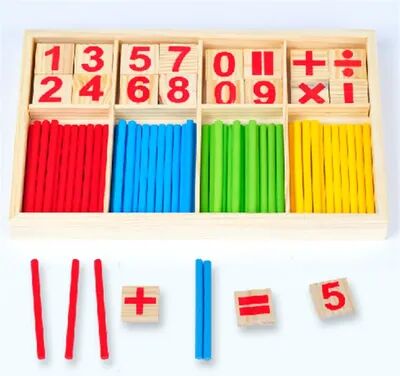
Smart Shopping Spot Wooden Digital Stick Educational Toys For Children, Montessori Math Teaching Aid For Knowledge Wooden Digital Stick Educational Toys For Children, Montessori Math Teaching Aid For KnowledgeFun and Engaging Learning Tool Introduce your child to the world of mathematics enlightenment with these Wooden Educational Toys. Designed to foster a love for learning, this Montessoriinspired tool uses digital sticks to make math both fun and...34,97 $*Shipping: 0,00 $Secure redirect to the provider
-
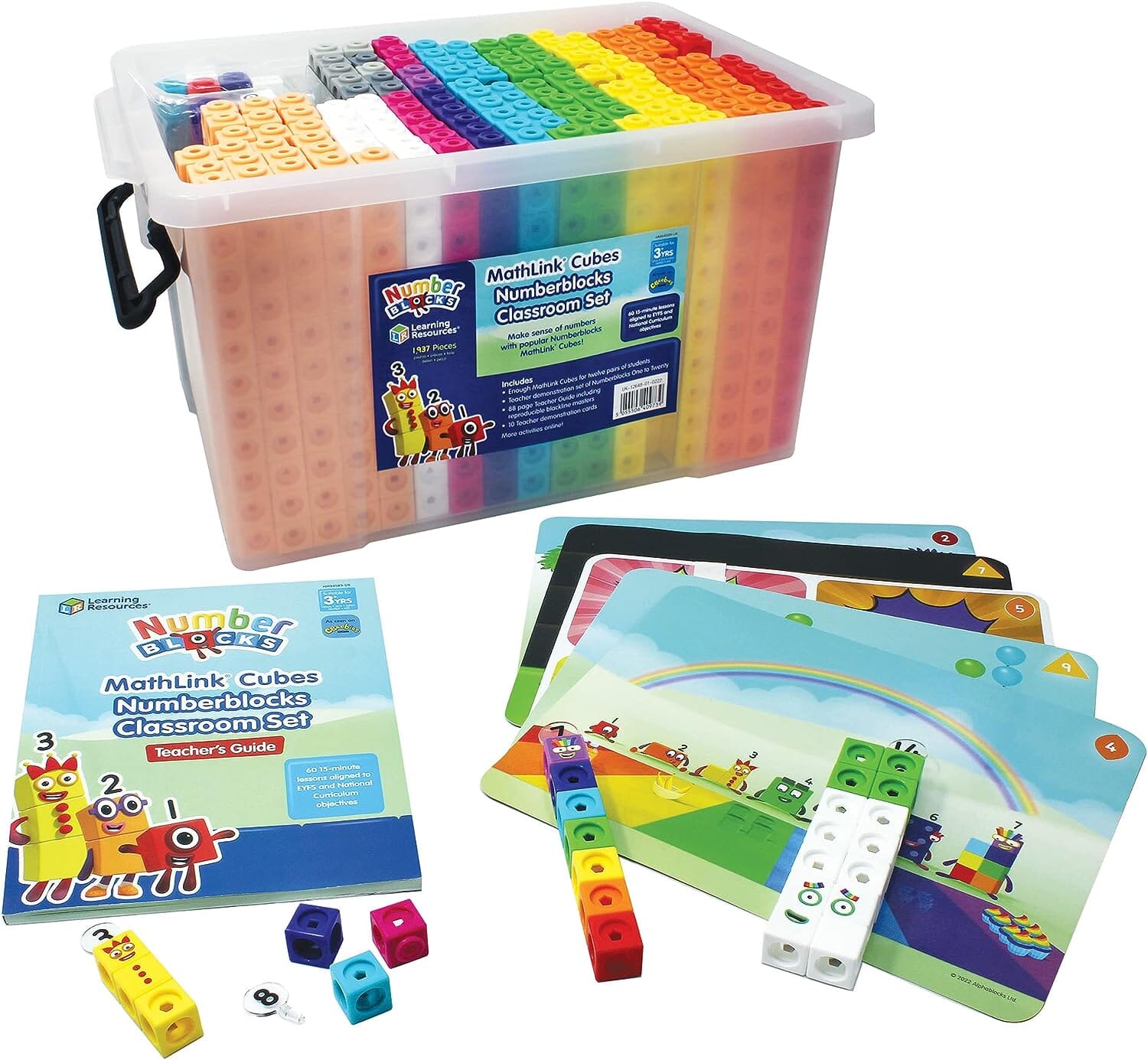
MathLink® Cubes Numberblocks Classroom Set - Ages 3+ - Educational Toy Learning ResourcesThis is the ultimate Numberblocks maths resources set developed to help teachers bring the maths concepts seen in the award-winning CBeebies TV series to life in the classroom. The set includes everything 12 pairs of pupils need to complete the 60 x 15-minute maths learning activities included in the comprehensive 88-page Teacher’s Guide. Activities align with the EYFS and National Curriculum objectives. The ultimate set for teachers to help children master maths by bringing the concepts shown in the award-winning TV series to life in the classroom. Developed to support maths learning in the classroom, this set uses the included comprehensive 88-page Teacher’s Guide to help children build essential early years maths skills including counting, place value, cardinality, subitising, composing and decomposing numbers, skip counting, addition, subtraction, and more for numbers 1-20. The quick and easy lessons incorporate group discussion and hands-on activities in 15 minutes. The Teacher’s Guide is split into three units. Unit one focuses on Numberblocks One to Five. Unit two focuses on Six to Ten, and unit three focuses on Eleven to Twenty. Lessons align with the EYFS and National Curriculum framework. The set has everything 12 pairs of pupils need to complete the activities featured in the Teacher’s Guide. Includes 1905 special edition Numberblocks MathLink Cubes, 20 Numberlings for One to Twenty, 5 double-sided demonstration cards, and the comprehensive Teacher’s Guide in a convenient storage tote.289,99 £*Shipping: 0,00 £Secure redirect to the provider
-
Perfect Picks Market Kids Learning Clock Silent Analog Teaching Wall Clock For Classroom & Bedroom Inch black 8 InchTransform learning into an exciting daily adventure with this Kids learning clock designed to help children master time with confidence. Featuring colorful numbers, clearly marked hands, and an easytoread analog display, it's perfect for young...54,97 $*Shipping: 0,00 $Secure redirect to the provider
-
JoyToys Montessori Wooden Learning Clock Time Teaching Puzzle For Kids Montessori Wooden Learning Clock Time Teaching Puzzle For KidsLearn through play with our wooden learning clock, designed to help children confidently understand time while developing essential early learning skills. This engaging Montessori clock combines handson puzzle play with interactive time practice,...29,97 $*Shipping: 0,00 $Secure redirect to the provider
-
How did timekeeping work in ancient times?
In ancient times, timekeeping was primarily based on the observation of celestial bodies such as the sun, moon, and stars. The movement of these celestial bodies helped people track the passage of time, with the sun's position in the sky indicating the time of day. Water clocks and sundials were also used to measure time more precisely. The concept of dividing the day into hours, minutes, and seconds was developed by the ancient Egyptians and Greeks, laying the foundation for modern timekeeping systems. **
-
How does timekeeping work in Star Wars?
In the Star Wars universe, timekeeping is based on the Galactic Standard Calendar, which is divided into 12 months with each month consisting of 30 days. The calendar is based on the orbit of the planet Coruscant, the capital of the Galactic Republic. Each day is divided into 24 standard hours, with each hour consisting of 60 minutes and each minute consisting of 60 seconds. Timekeeping in Star Wars is essential for coordinating events across different planets and systems in the galaxy. **
-
How can one program timekeeping in C?
To program timekeeping in C, one can use the time.h header file which provides functions to work with date and time. The time() function can be used to get the current time in seconds since the Epoch. This value can be converted to a more readable format using functions like localtime() or gmtime(). Additionally, functions like strftime() can be used to format the time in a specific way. By utilizing these functions, one can effectively program timekeeping in C. **
-
How does the timekeeping work in Star Wars?
In the Star Wars universe, timekeeping is based on the Galactic Standard Calendar, which is divided into 12 months with each month consisting of 30 days. The calendar is based on the Coruscant solar cycle, with each day lasting 24 standard hours. Time is also measured in terms of rotations of the planet Coruscant, with 24 hours in a day and 60 minutes in an hour. The timekeeping system in Star Wars is consistent across the galaxy and is used by various species and cultures. **
Similar search terms for Timekeeping
-
Fox Eye Publishing Universal Knowledge Library Science and History 8 Volume Book Collection Set – Ancient Civilisations, Human Body, Universe & Educational Learning BookUniversal Knowledge Library: Science and History - 8 Volumes Introduction: Welcome to the Universal Knowledge Library, a magical collection that opens the door to the wonders of science and history. These eight beautifully illustrated books will take you on exciting adventures, where you'll explore ancient civilizations, discover amazing inventions, and learn about the mysteries of the universe. Get ready to embark on a journey of discovery and wonder! Ancient Civilisations: Travel back in time to explore the incredible stories of ancient civilizations like Egypt, Greece, and Rome. Learn about their cultures, inventions, and the people who shaped history. Inventions: Uncover the amazing inventions that changed the world, from the wheel and the printing press to modern-day gadgets. Discover how these creations have made our lives easier and more exciting. Prehistoric Life: Step into the world of dinosaurs and other prehistoric creatures. Find out how these incredible animals lived millions of years ago and what scientists have learned from their fossils. Universe: Look up at the night sky and explore the vast universe. Learn about stars, galaxies, black holes, and the fascinating science behind the cosmos. Energy: Dive into the world of energy and discover how it powers everything around us. From the food we eat to the electricity that lights our homes, energy is all around us! Human Body: Take a fantastic journey inside the human body. Learn about how our organs work, how we grow, and the amazing ways our bodies keep us healthy. Planets: Visit the planets in our solar system and beyond. Discover the unique features of each planet and what makes Earth so special. Weather: Understand the science of weather and how it affects our daily lives. Learn about rain, snow, storms, and the fascinating patterns of our planet's climate. With the Universal Knowledge Library, each book is a new adventure waiting to be explored. Open the pages and let your curiosity lead the way!17,99 £*Shipping: 2,99 £Secure redirect to the provider
-
Scholastic Teaching Resources Sight Word Readers Classroom Box SetJumpstart reading success with this irresistible collection of 125 little books that introduce and reinforce the first 50 must-know sight words! Each set includes a sturdy storage box stocked with 5 copies of 25 delightful tales—each presenting two...101,99 $*Shipping: 0,00 $Secure redirect to the provider
-
Tiny Tots Teens Trends Kids Montessori Wooden Clock Toy, Time Learning Teaching Aids, Educational For Children, Primary School Clever Board Toy pinkIntroducing the Kids Montessori Wooden Clock Toy, a perfect educational tool that teaches children how to understand time while developing essential motor skills. This beautifully crafted clock toy is made from natural and sustainable solid wood,...29,97 $*Shipping: 0,00 $Secure redirect to the provider
-
Perfect Picks Market Kids Learning Clock Silent Analog Teaching Wall Clock For Classroom & Bedroom Inch white 10 InchTransform learning into an exciting daily adventure with this Kids learning clock designed to help children master time with confidence. Featuring colorful numbers, clearly marked hands, and an easytoread analog display, it's perfect for young...69,97 $*Shipping: 0,00 $Secure redirect to the provider
-
What were the timekeeping methods in the Middle Ages?
In the Middle Ages, timekeeping methods were primarily based on the position of the sun in the sky. Sundials were commonly used to track time during the day, with the shadow cast by the sun indicating the time. Water clocks, known as clepsydrae, were also used to measure time by the flow of water from one container to another. Candle clocks were another method, where time was measured by the amount of wax that had burned. These methods were imprecise compared to modern timekeeping but were sufficient for daily activities in the Middle Ages. **
-
How does timekeeping work in the Bleach Soul Society?
In the Bleach Soul Society, timekeeping is based on a 24-hour cycle similar to Earth. However, the Soul Society also has its own unique method of timekeeping known as the Gotei 13 Timekeeping. This system divides the day into six "gates," with each gate lasting four hours. The gates are named after the divisions of the Gotei 13, the military force of the Soul Society. This system is used to coordinate the activities of the Gotei 13 and other Soul Society organizations. Overall, timekeeping in the Bleach Soul Society is a combination of traditional Earth timekeeping and its own distinct system. **
-
How does the timekeeping work in the Bleach Soul Society?
In the Bleach Soul Society, timekeeping is based on a system of day and night cycles similar to Earth. The Soul Society has its own sun and moon that rise and set, marking the passage of time. The Soul Reapers use these celestial bodies to keep track of time and schedule their duties and activities. Additionally, the Seireitei, the central city of the Soul Society, has a large clock tower that helps in timekeeping for the residents. Overall, timekeeping in the Bleach Soul Society is a combination of natural celestial cues and man-made structures to maintain order and organization. **
-
What is the difference between timekeeping and different month lengths?
Timekeeping refers to the measurement and recording of time, typically using units such as seconds, minutes, and hours. Different month lengths, on the other hand, refer to the varying number of days in each month of the year. While timekeeping is a universal system used to track the passage of time, different month lengths are a result of the Earth's orbit around the sun and the lunar cycle. This leads to months ranging from 28 to 31 days, with February being the shortest month and varying lengths of 30 or 31 days for the other months. **
* All prices are inclusive of VAT and, if applicable, plus shipping costs. The offer information is based on the details provided by the respective shop and is updated through automated processes. Real-time updates do not occur, so deviations can occur in individual cases. ** Note: Parts of this content were created by AI.