Buy educationpoints.eu ?
We are moving the project
educationpoints.eu .
Are you interested in purchasing the domain
educationpoints.eu ?
domain@kv-gmbh.de · 0541-91531010
Buy educationpoints.eu ?
Are tarantulas domesticated?
No, tarantulas are not considered domesticated animals. They are wild creatures that are typically found in their natural habitats, such as forests, deserts, and grasslands. While some people may keep tarantulas as pets, they are not truly domesticated in the same way that dogs, cats, or other animals are. Tarantulas have specific needs and behaviors that are more suited to their natural environment, and they are not typically bred or raised in captivity for the purpose of domestication. **
When were horses domesticated?
Horses were domesticated around 4000-3500 BC on the Eurasian steppes. This marked a significant turning point in human history, as it allowed for faster transportation, agriculture, and warfare. The domestication of horses played a crucial role in the development of many ancient civilizations. **

Similar search terms for Domesticated
Top-Angebote
Products related to Domesticated:
-
Perfect Picks Market Kids Learning Clock Silent Analog Teaching Wall Clock For Classroom & Bedroom Inch black 8 InchTransform learning into an exciting daily adventure with this Kids learning clock designed to help children master time with confidence. Featuring colorful numbers, clearly marked hands, and an easytoread analog display, it's perfect for young...54,97 $*Shipping: 0,00 $Secure redirect to the provider
-
JoyToys Montessori Wooden Learning Clock Time Teaching Puzzle For Kids Montessori Wooden Learning Clock Time Teaching Puzzle For KidsLearn through play with our wooden learning clock, designed to help children confidently understand time while developing essential early learning skills. This engaging Montessori clock combines handson puzzle play with interactive time practice,...29,97 $*Shipping: 0,00 $Secure redirect to the provider
-
Scholastic Teaching Resources Sight Word Readers Classroom Box SetJumpstart reading success with this irresistible collection of 125 little books that introduce and reinforce the first 50 must-know sight words! Each set includes a sturdy storage box stocked with 5 copies of 25 delightful tales—each presenting two...101,99 $*Shipping: 0,00 $Secure redirect to the provider
-
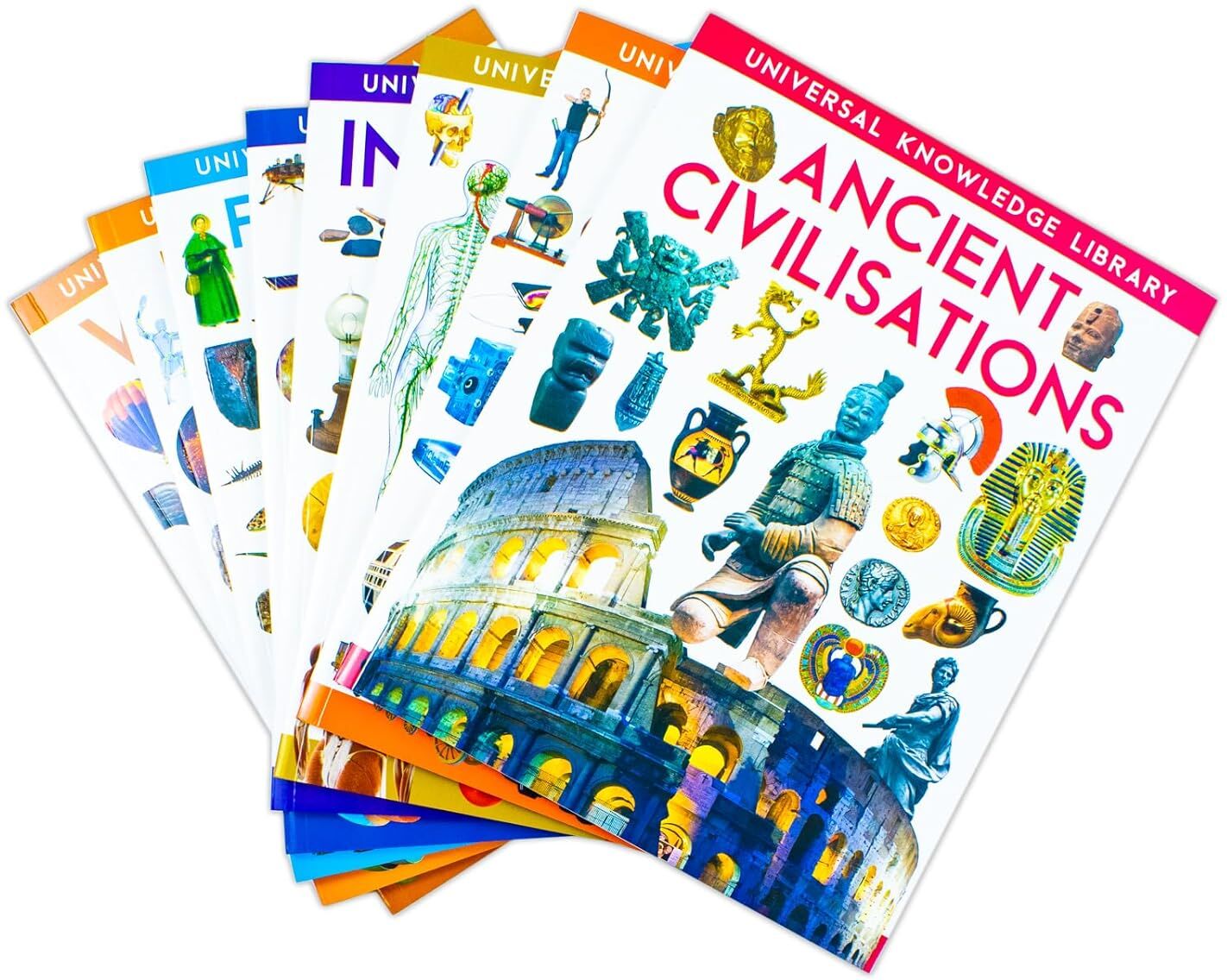
Fox Eye Publishing Universal Knowledge Library Science and History 8 Volume Book Collection Set – Ancient Civilisations, Human Body, Universe & Educational Learning BookUniversal Knowledge Library: Science and History - 8 Volumes Introduction: Welcome to the Universal Knowledge Library, a magical collection that opens the door to the wonders of science and history. These eight beautifully illustrated books will take you on exciting adventures, where you'll explore ancient civilizations, discover amazing inventions, and learn about the mysteries of the universe. Get ready to embark on a journey of discovery and wonder! Ancient Civilisations: Travel back in time to explore the incredible stories of ancient civilizations like Egypt, Greece, and Rome. Learn about their cultures, inventions, and the people who shaped history. Inventions: Uncover the amazing inventions that changed the world, from the wheel and the printing press to modern-day gadgets. Discover how these creations have made our lives easier and more exciting. Prehistoric Life: Step into the world of dinosaurs and other prehistoric creatures. Find out how these incredible animals lived millions of years ago and what scientists have learned from their fossils. Universe: Look up at the night sky and explore the vast universe. Learn about stars, galaxies, black holes, and the fascinating science behind the cosmos. Energy: Dive into the world of energy and discover how it powers everything around us. From the food we eat to the electricity that lights our homes, energy is all around us! Human Body: Take a fantastic journey inside the human body. Learn about how our organs work, how we grow, and the amazing ways our bodies keep us healthy. Planets: Visit the planets in our solar system and beyond. Discover the unique features of each planet and what makes Earth so special. Weather: Understand the science of weather and how it affects our daily lives. Learn about rain, snow, storms, and the fascinating patterns of our planet's climate. With the Universal Knowledge Library, each book is a new adventure waiting to be explored. Open the pages and let your curiosity lead the way!17,99 £*Shipping: 2,99 £Secure redirect to the provider


-
Can a dog be domesticated?
Yes, dogs can be domesticated. Domestication is the process by which animals adapt to living with humans and can be tamed or trained. Dogs have been domesticated for thousands of years and have evolved to form close bonds with humans. Through selective breeding and training, dogs have become one of the most popular and beloved domesticated animals worldwide. **
-
Can large cats be domesticated?
Large cats, such as lions and tigers, are not typically suitable for domestication. These animals have wild instincts and natural behaviors that make them difficult to train and control in a domestic setting. Additionally, their size and strength can pose a danger to humans and other pets. While some people may attempt to keep large cats as pets, it is generally not recommended due to the risks involved and the welfare of the animals. **
-
Why were squirrels never domesticated?
Squirrels were never domesticated because they are highly independent and territorial animals. They have a strong instinct to roam and forage for food in the wild, which makes it difficult for them to adapt to a domesticated lifestyle. Additionally, squirrels are known for their high energy levels and can be difficult to train and control, making them unsuitable for domestication. Finally, their natural behaviors, such as hoarding food and digging, are not conducive to living in a domestic environment. **
-
How were domestic cats actually domesticated?
Domestic cats were likely domesticated around 9,000 years ago in the Near East, where they were attracted to human settlements due to the presence of rodents. Over time, humans began to intentionally breed and care for cats, leading to their domestication. Cats provided valuable pest control for early agricultural societies, and their close relationship with humans eventually led to their widespread domestication and integration into human households. Today, domestic cats are one of the most popular pets worldwide. **


"Is humanity being domesticated through technological progress?"
Humanity is not being domesticated through technological progress in the traditional sense of the word. However, technology does have a significant impact on human behavior and society. It has changed the way we communicate, work, and interact with the world around us. While technology has the potential to shape and influence human behavior, it is ultimately up to individuals and society as a whole to determine how we use and adapt to these advancements. **
Can every animal and plant be domesticated?
Not every animal and plant can be domesticated. Domestication requires certain characteristics such as a willingness to breed in captivity, a diet that can be provided by humans, and a non-aggressive nature. Some animals and plants do not possess these traits and therefore cannot be successfully domesticated. Additionally, domestication is a long and complex process that requires careful selection and breeding over many generations, making it impractical for every species. **
Top-Angebote
Products related to Domesticated:
-
Smart Shopping Spot Wooden Digital Stick Educational Toys For Children, Montessori Math Teaching Aid For Knowledge Wooden Digital Stick Educational Toys For Children, Montessori Math Teaching Aid For KnowledgeFun and Engaging Learning Tool Introduce your child to the world of mathematics enlightenment with these Wooden Educational Toys. Designed to foster a love for learning, this Montessoriinspired tool uses digital sticks to make math both fun and...34,97 $*Shipping: 0,00 $Secure redirect to the provider
-
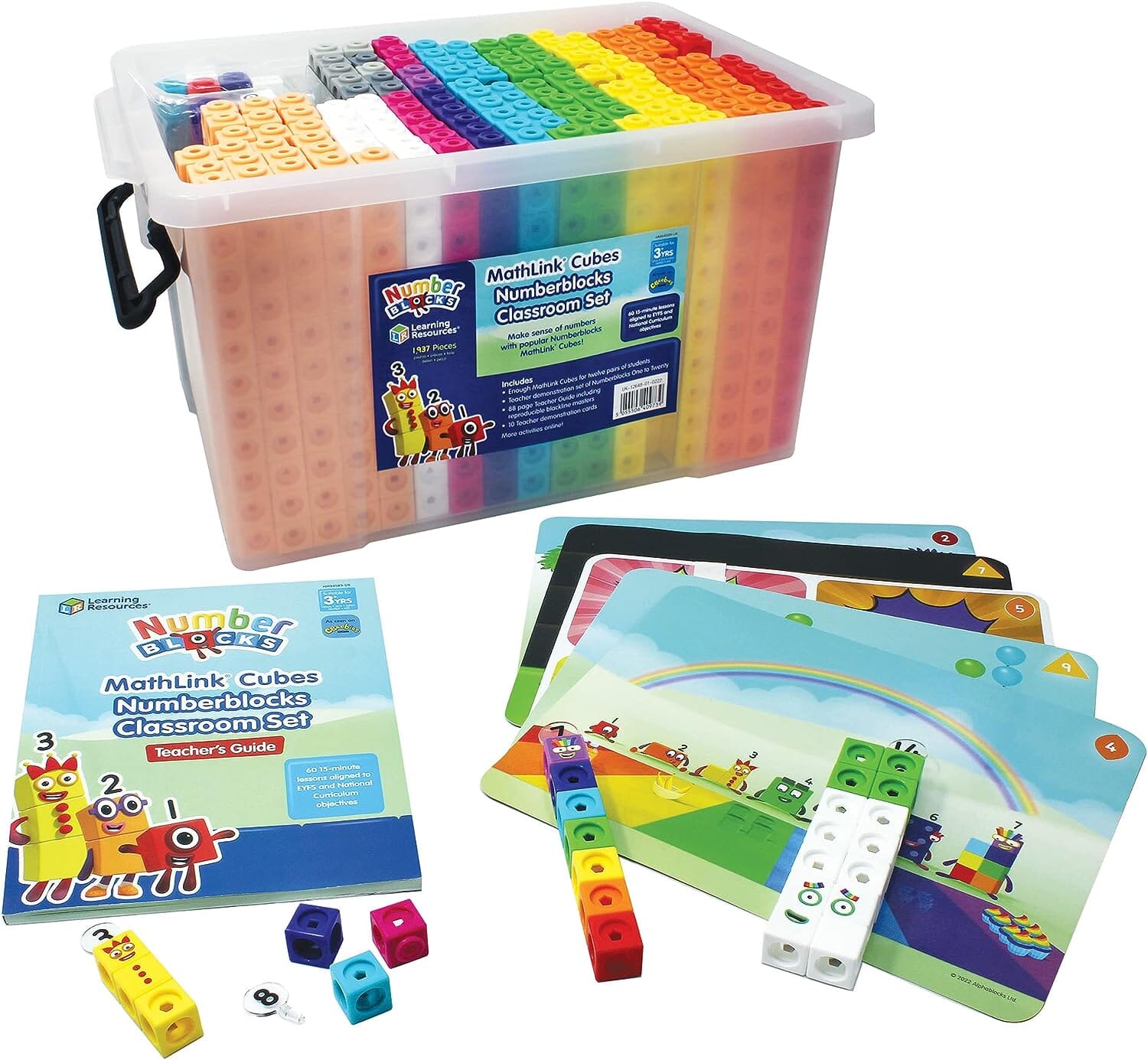
MathLink® Cubes Numberblocks Classroom Set - Ages 3+ - Educational Toy Learning ResourcesThis is the ultimate Numberblocks maths resources set developed to help teachers bring the maths concepts seen in the award-winning CBeebies TV series to life in the classroom. The set includes everything 12 pairs of pupils need to complete the 60 x 15-minute maths learning activities included in the comprehensive 88-page Teacher’s Guide. Activities align with the EYFS and National Curriculum objectives. The ultimate set for teachers to help children master maths by bringing the concepts shown in the award-winning TV series to life in the classroom. Developed to support maths learning in the classroom, this set uses the included comprehensive 88-page Teacher’s Guide to help children build essential early years maths skills including counting, place value, cardinality, subitising, composing and decomposing numbers, skip counting, addition, subtraction, and more for numbers 1-20. The quick and easy lessons incorporate group discussion and hands-on activities in 15 minutes. The Teacher’s Guide is split into three units. Unit one focuses on Numberblocks One to Five. Unit two focuses on Six to Ten, and unit three focuses on Eleven to Twenty. Lessons align with the EYFS and National Curriculum framework. The set has everything 12 pairs of pupils need to complete the activities featured in the Teacher’s Guide. Includes 1905 special edition Numberblocks MathLink Cubes, 20 Numberlings for One to Twenty, 5 double-sided demonstration cards, and the comprehensive Teacher’s Guide in a convenient storage tote.289,99 £*Shipping: 0,00 £Secure redirect to the provider
-
Perfect Picks Market Kids Learning Clock Silent Analog Teaching Wall Clock For Classroom & Bedroom Inch black 8 InchTransform learning into an exciting daily adventure with this Kids learning clock designed to help children master time with confidence. Featuring colorful numbers, clearly marked hands, and an easytoread analog display, it's perfect for young...54,97 $*Shipping: 0,00 $Secure redirect to the provider
-
JoyToys Montessori Wooden Learning Clock Time Teaching Puzzle For Kids Montessori Wooden Learning Clock Time Teaching Puzzle For KidsLearn through play with our wooden learning clock, designed to help children confidently understand time while developing essential early learning skills. This engaging Montessori clock combines handson puzzle play with interactive time practice,...29,97 $*Shipping: 0,00 $Secure redirect to the provider
-
Are tarantulas domesticated?
No, tarantulas are not considered domesticated animals. They are wild creatures that are typically found in their natural habitats, such as forests, deserts, and grasslands. While some people may keep tarantulas as pets, they are not truly domesticated in the same way that dogs, cats, or other animals are. Tarantulas have specific needs and behaviors that are more suited to their natural environment, and they are not typically bred or raised in captivity for the purpose of domestication. **
-
When were horses domesticated?
Horses were domesticated around 4000-3500 BC on the Eurasian steppes. This marked a significant turning point in human history, as it allowed for faster transportation, agriculture, and warfare. The domestication of horses played a crucial role in the development of many ancient civilizations. **
-
Can a dog be domesticated?
Yes, dogs can be domesticated. Domestication is the process by which animals adapt to living with humans and can be tamed or trained. Dogs have been domesticated for thousands of years and have evolved to form close bonds with humans. Through selective breeding and training, dogs have become one of the most popular and beloved domesticated animals worldwide. **
-
Can large cats be domesticated?
Large cats, such as lions and tigers, are not typically suitable for domestication. These animals have wild instincts and natural behaviors that make them difficult to train and control in a domestic setting. Additionally, their size and strength can pose a danger to humans and other pets. While some people may attempt to keep large cats as pets, it is generally not recommended due to the risks involved and the welfare of the animals. **
Similar search terms for Domesticated
-
Scholastic Teaching Resources Sight Word Readers Classroom Box SetJumpstart reading success with this irresistible collection of 125 little books that introduce and reinforce the first 50 must-know sight words! Each set includes a sturdy storage box stocked with 5 copies of 25 delightful tales—each presenting two...101,99 $*Shipping: 0,00 $Secure redirect to the provider
-
Fox Eye Publishing Universal Knowledge Library Science and History 8 Volume Book Collection Set – Ancient Civilisations, Human Body, Universe & Educational Learning BookUniversal Knowledge Library: Science and History - 8 Volumes Introduction: Welcome to the Universal Knowledge Library, a magical collection that opens the door to the wonders of science and history. These eight beautifully illustrated books will take you on exciting adventures, where you'll explore ancient civilizations, discover amazing inventions, and learn about the mysteries of the universe. Get ready to embark on a journey of discovery and wonder! Ancient Civilisations: Travel back in time to explore the incredible stories of ancient civilizations like Egypt, Greece, and Rome. Learn about their cultures, inventions, and the people who shaped history. Inventions: Uncover the amazing inventions that changed the world, from the wheel and the printing press to modern-day gadgets. Discover how these creations have made our lives easier and more exciting. Prehistoric Life: Step into the world of dinosaurs and other prehistoric creatures. Find out how these incredible animals lived millions of years ago and what scientists have learned from their fossils. Universe: Look up at the night sky and explore the vast universe. Learn about stars, galaxies, black holes, and the fascinating science behind the cosmos. Energy: Dive into the world of energy and discover how it powers everything around us. From the food we eat to the electricity that lights our homes, energy is all around us! Human Body: Take a fantastic journey inside the human body. Learn about how our organs work, how we grow, and the amazing ways our bodies keep us healthy. Planets: Visit the planets in our solar system and beyond. Discover the unique features of each planet and what makes Earth so special. Weather: Understand the science of weather and how it affects our daily lives. Learn about rain, snow, storms, and the fascinating patterns of our planet's climate. With the Universal Knowledge Library, each book is a new adventure waiting to be explored. Open the pages and let your curiosity lead the way!17,99 £*Shipping: 2,99 £Secure redirect to the provider
-
Multicon Wholesale Hub Educational Learning Toys For Kids Fun, Interactive Learning Play For Toddlers Educational Learning Toys For Kids Fun, Interactive Learning Play For ToddlersSpark your child's curiosity and enhance their learning journey with these educational learning toys designed for toddlers ages 27. Carefully crafted to promote cognitive and motor skills, this interactive toy set offers a variety of activities that...59,97 $*Shipping: 0,00 $Secure redirect to the provider
-
Perfect Picks Market Kids Learning Clock Silent Analog Teaching Wall Clock For Classroom & Bedroom Inch white 10 InchTransform learning into an exciting daily adventure with this Kids learning clock designed to help children master time with confidence. Featuring colorful numbers, clearly marked hands, and an easytoread analog display, it's perfect for young...69,97 $*Shipping: 0,00 $Secure redirect to the provider
-
Why were squirrels never domesticated?
Squirrels were never domesticated because they are highly independent and territorial animals. They have a strong instinct to roam and forage for food in the wild, which makes it difficult for them to adapt to a domesticated lifestyle. Additionally, squirrels are known for their high energy levels and can be difficult to train and control, making them unsuitable for domestication. Finally, their natural behaviors, such as hoarding food and digging, are not conducive to living in a domestic environment. **
-
How were domestic cats actually domesticated?
Domestic cats were likely domesticated around 9,000 years ago in the Near East, where they were attracted to human settlements due to the presence of rodents. Over time, humans began to intentionally breed and care for cats, leading to their domestication. Cats provided valuable pest control for early agricultural societies, and their close relationship with humans eventually led to their widespread domestication and integration into human households. Today, domestic cats are one of the most popular pets worldwide. **
-
"Is humanity being domesticated through technological progress?"
Humanity is not being domesticated through technological progress in the traditional sense of the word. However, technology does have a significant impact on human behavior and society. It has changed the way we communicate, work, and interact with the world around us. While technology has the potential to shape and influence human behavior, it is ultimately up to individuals and society as a whole to determine how we use and adapt to these advancements. **
-
Can every animal and plant be domesticated?
Not every animal and plant can be domesticated. Domestication requires certain characteristics such as a willingness to breed in captivity, a diet that can be provided by humans, and a non-aggressive nature. Some animals and plants do not possess these traits and therefore cannot be successfully domesticated. Additionally, domestication is a long and complex process that requires careful selection and breeding over many generations, making it impractical for every species. **
* All prices are inclusive of VAT and, if applicable, plus shipping costs. The offer information is based on the details provided by the respective shop and is updated through automated processes. Real-time updates do not occur, so deviations can occur in individual cases. ** Note: Parts of this content were created by AI.